Saturday, August 13, 2005


Splash of colours inside the Potala Palace Posted by Picasa

Potala facades Posted by Picasa

More sights of the Potala Palace Posted by Picasa

Finally, the grand entrance of the Potala Palace. From here, we have to climb all the way to the top of the palace.

The Potala Palace, located in (The sacred city of Lamaism; known as the Forbidden City for its former inaccessibility and hostility to strangers) Lhasa, Tibet, was the chief residence of the (Chief lama and once ruler of Tibet) Dalai Lama until the 14th Dalai Lama fled to Dharamsala, India after a failed uprising in 1959. Today the Potala Palace is a state museum. It is now a popular tourist attraction and an UNESCO World Heritage Site .

Built on the side of Potala Hill, Potala Palace, with its vast inward-sloping walls broken only in the upper parts by straight rows of many windows, and its flat roofs at various levels, is not unlike a fortress in appearance. At the south base of the rock is a large space enclosed by walls and gates, with great (A porch or entrance to a building consisting of a covered and often columned area) porticos on the inner side. A series of tolerably easy staircases, broken by intervals of gentle ascent, leads to the summit of the rock. The whole width of this is occupied by the palace.

The central part of this group of buildings rises in a vast quadrangular mass above its satellites to a great height, terminating in gilt canopies similar to those on the Jokhang. This central member of Potala is called the "red palace" from its crimson colour, which distinguishes it from the rest. It contains the principal halls and chapels and shrines of past Dalai Lamas. There is in these much rich decorative painting, with jewelled work, carving and other ornament. Posted by Picasa

Sights of the Potala Palace Posted by Picasa

Sights of the Potala Palace Posted by Picasa

Sights of the Potala Palace Posted by Picasa

Sights of the Potala Palace Posted by Picasa

The tablet bearing the words "Potala Palace" at the entrance. Posted by Picasa

The famous Potala Palace as seen from outside my hotel, Tibet Red Hill Hotel. Never in my life did I expect to be "neighbours" with the Potala Palace for 6 nights! Posted by Picasa

Thursday, August 11, 2005


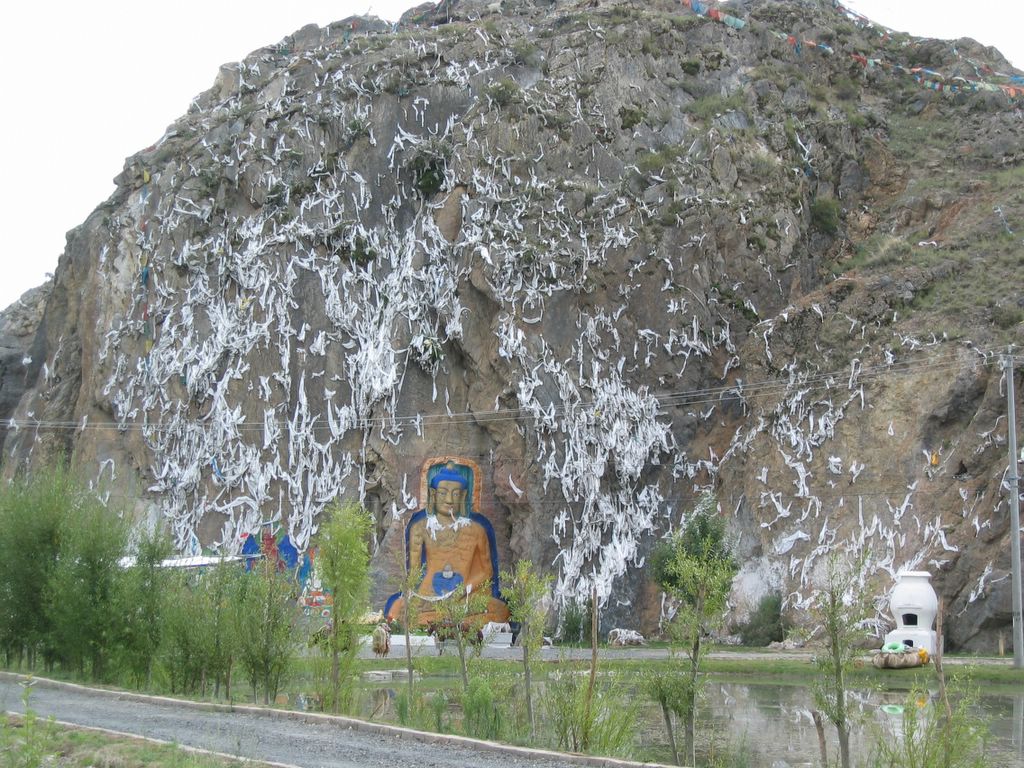
Nietang Buddha, named after Mt. Nietang 40 km (24.85 miles) southwest of Lhasa city, is the biggest stone statue engraved on a cliff in Tibet. Located at the north foot of Nietang Mountain, it is the first attraction to welcome visitors to Lhasa. Almost every passenger wants to get off the bus to get closer to it and take a photo as a souvenir.
The Buddha statue is one of Sakyamuni sitting under a bodhi tree to capture evils. The statue is 8 meters (about 26 feet) in width and 9.8 meters (around 32 feet) in height including the base, 1.3 meters (4.27 feet). With its striking colour it can be seen clearly several miles away. While taking a closer look at it, you may feel mysterious, or even that you were in the world of Buddha. Authoritarians highly evaluate the statue, stating that it shows a perfect combination of the stone's quality and the engraving skill by combining moderate proportions and using bold and unconstrained lines, so that the statue looks vivid and lifelike.
Having gone through many ups and downs, Nietang Buddha still maintains his lustre and enchantment and receives countless Buddhists and visitors with his mystical smile and majestic appearance.
 Posted by Picasa

Trandruk Temple is considered to be one of the first Buddhist temple built in Tibet. It was built by King Songtsen Gampo in the seventh century. After king Songtsen Gampo moved the capital to Lhasa, from time to time, he would come back to his hometown with his Chinese queen Wen Cheng and stay in temple. Therefore, Trandruk Temple becomes the Winter Palace of Songtsen Gampo. The temple is located not far from Tsedang on the way to Yumbulangang, it is about 7km south of Tsedang. The tombs of the Tibetan kings are located in the Chonggye County, 28km from Tsedang. It is believed that all the eariy Tibetan kings are buried here. Today only 11 of them are still visible. The biggest and most easily recognizable tomb belongs to king Songtsen Gampo. It is said than the king's two queens were also buried with him here.
 Posted by Picasa

From the perch at Yongbu Lakang, we see Tibet's first cultivated fields of highland barley. There is a town at the far end of the field, at the foot of the hills. Posted by Picasa

Around 1st century AD, the Yongbu Lakang Palace was built by the first Tibetan King on this hill in Tsedang. As the temple was high up (not so high up, really), the tour group members mostly rode horses up and down to visit the temple.
 Posted by Picasa

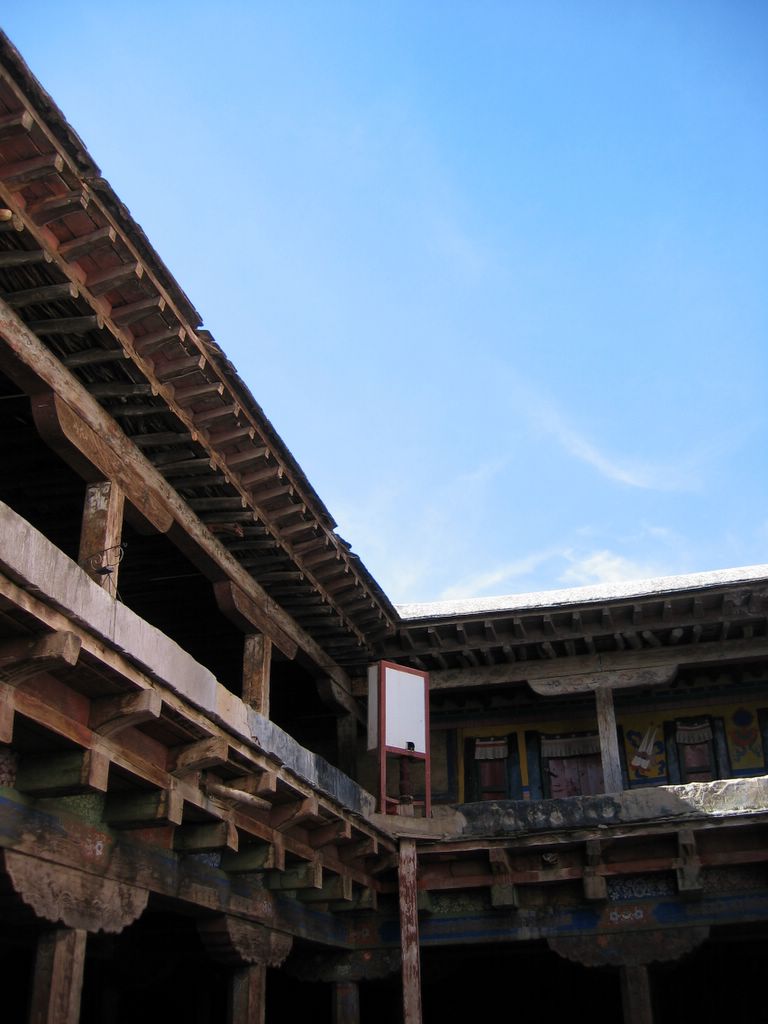
The quarters of the lamas of Samye Monastery. Posted by Picasa

The offerings that the devotees buy to burn. Leaves a sweet smelling aroma in the air. Posted by Picasa

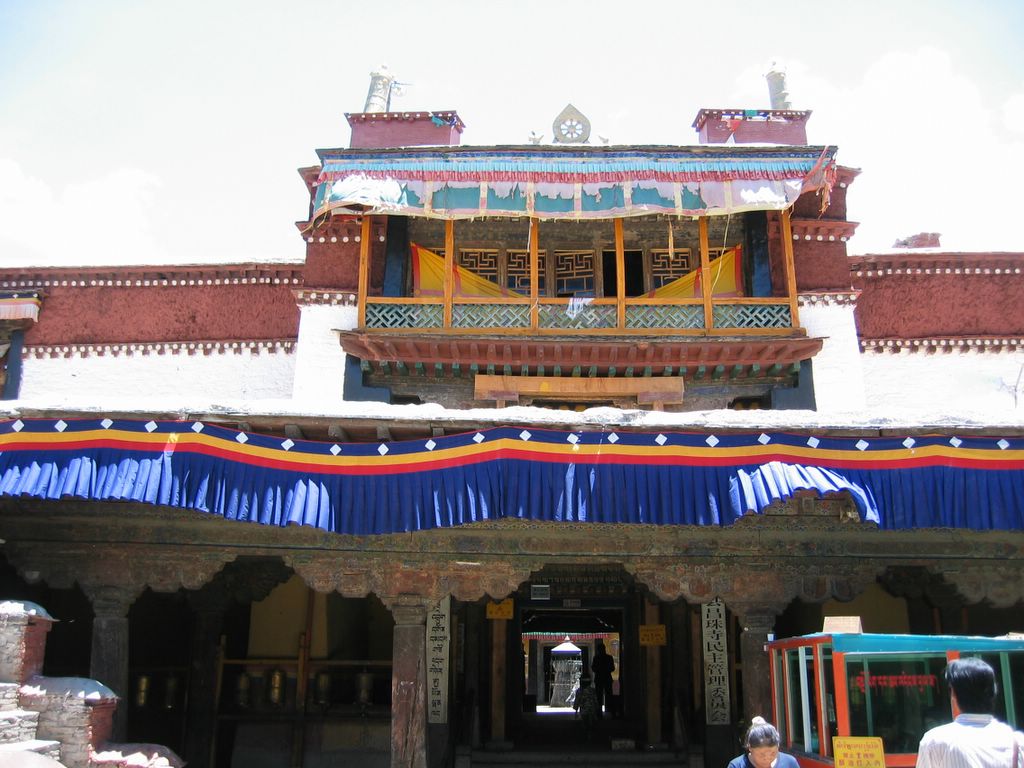
Facade of Samye Monastery with name tablet in foreground. Posted by Picasa

One of several reconstructed chortens on the grounds. Posted by Picasa

The famous Samye Monastery.  Posted by Picasa

Those who want to see how Samye Monastery looks like inside the temple can visit http://www.benoa.net/tibet/samye/. I've decided not to pay lots and lots to take pictures inside the temples. After all, as an amateur, I'll never have great shots and why try and outdo the masters who've kindly shared the fruits of their labour on the web?

Scenes enroute Samye Monastery in Zedang. Resembles a desert and its oasis, right? If the bus had stopped a hundred metres before, the striations in the sand caused by the wind (see foreground of picture) would have been much much clearer and defined.  Posted by Picasa

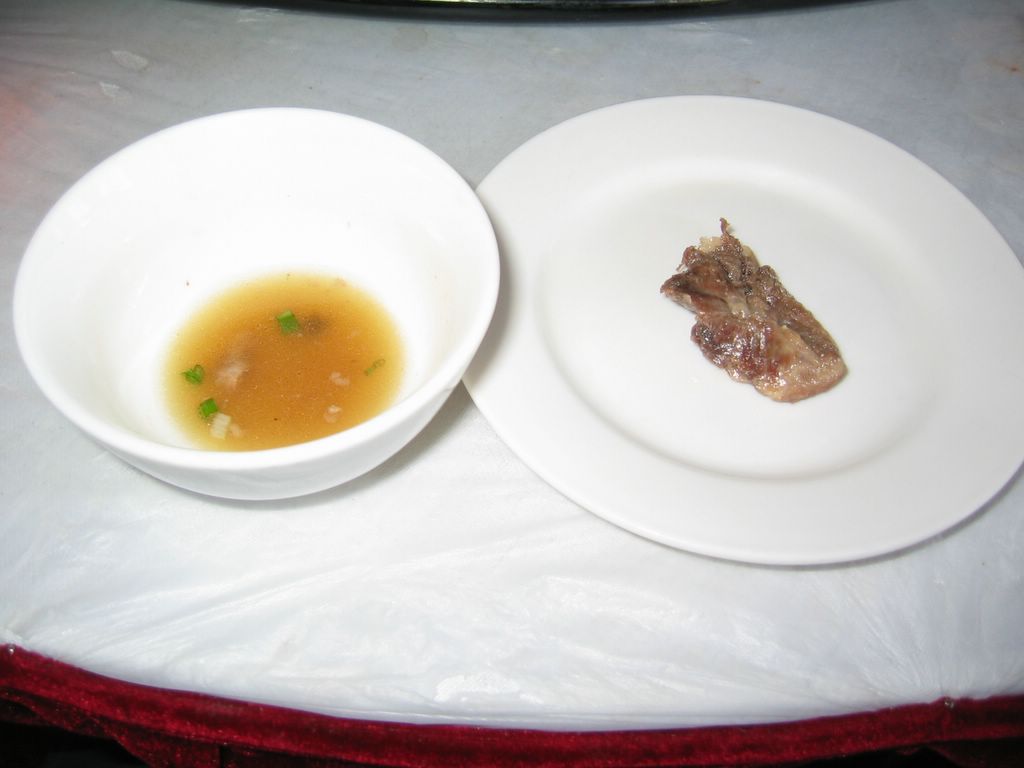
No, we are not having French cuisine in Tibet. Owing to the extremely thin air in Tibet, the colour of pork (see plate) is dark red, almost black! Posted by Picasa

Now you know why when you come down from the plane, you've got so much fart! Posted by Picasa

The simple permutation of letters: LXA and LAX defines hell and heaven! Posted by Picasa

Lhasa Airport Posted by Picasa

Wednesday, August 10, 2005


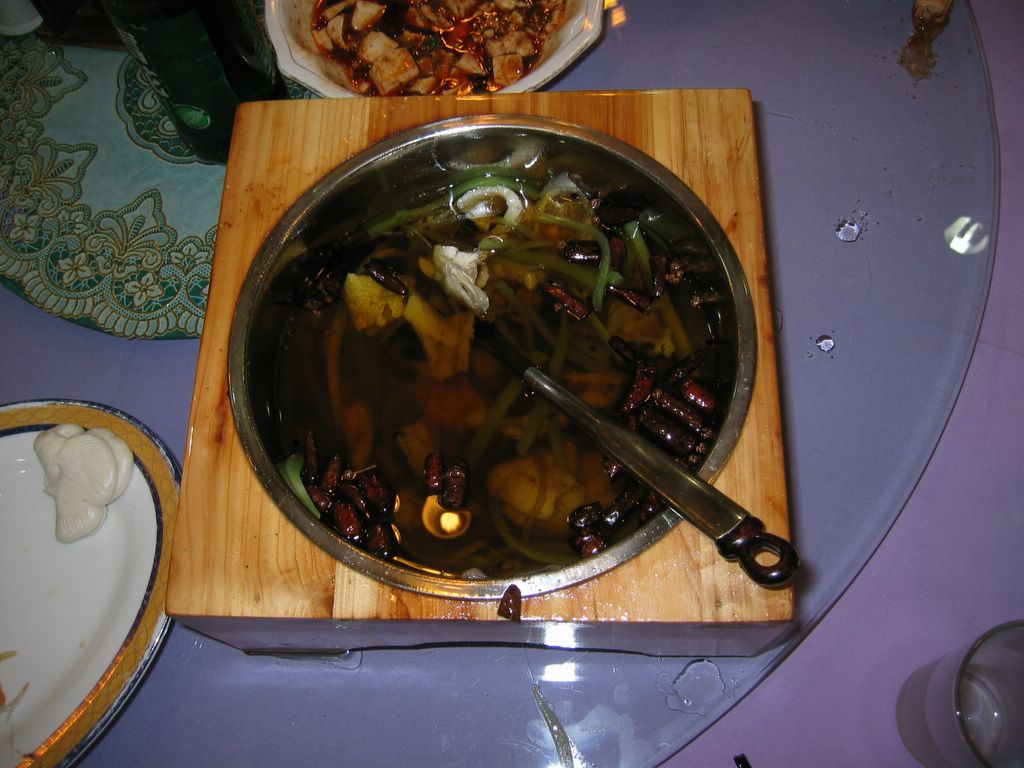
This is a typical Sze Chuan dish, where the fish is actually cooked in oil spiced up using Sze Chuan flower peppers and pepper corns. Fiery! Posted by Picasa